

What really matters to me is to bring a smile on every child face
and to provide them the same avenues, which each and every kid deserves.
What I mean by the above statement is ‘In our country where still
one third of the kids are out of school, whereas a 4th standard
student in a government school can’t read a text of 2nd grade and 60% of
second year children are unable to read a simple paragraph, and 70% cannot
perform simple mathematical tasks such as long division’ we today have to think
carefully about the education and how we aim to target this mammoth issue and
for this our youth has to come forward and take the lead to change and make the
world a better place to live.
Also I
don’t belong to a family of teachers or principals and neither my parents ever
dreamt this career avenue for me, but I would say it was the stark reality
which struck me while I was in college enjoying my life to the fullest but
knowing of some gap being existing.
Let me
briefly tell you about my journey and what makes me so much passionate about
education.
One day
I was sitting with bunch of my friends in the cafeteria having a normal
conversation when the ‘Bhola came to serve us the tea’ .I randomly asked him
how much he studied, he replied “Bhaya till 7th Standard “ and out
of no where I asked him a simple multiplication and he couldn’t answer, Further
moving ahead I asked him to read a simple paragraph which he couldn’t do. It
really left me perplexed that if a kid studying in 7th standard,
living in the heart of India and residing next to the best engineering college
can’t do a simple mathematics and reading while in 7th what’s really
is the future of this kid, our country and what are we the youth doing about
this? Except criticizing the government for sure….
My
friends and I decided to go to the bottom of the root and resolve this issue.
With firm determination we went to his school where for the 1st time
we saw a class being run by a 8th standard student and on asking him
about the teacher he said “Masterji 8 din ki chutti pe hain”(Teacher is on a 8
day vacation).
While we
tried our best to talk to the principal of the school, however she just refused
to talk and brushed us aside giving an excuse that’s it’s not as easy to run a
school with so many kids.
Later
that day, we discussed this issue with our professor and while he was pleased
to see our cognizant of what’s happening around ourselves but he made a comment
that “While everyone of you has seen the
dark side of India but no one is willing to change it or amend it for the
better, everyone today is just thinking about himself rather than the society”
Which
really made me ponder on his words and with few more friends we started a
project in our college by the name “sapney” which basically was the
evening classes being run by engineering college students in the engineering
college.
The
model was quite simple: -
1. We
wanted to cover the basic arithmetic, reading, science and speaking
2. The school
would be open for 2 hours and everyone who is interested in learning would be
welcome.
3. We would
make use of technology as much as we can to make the lesson interesting and
easy to understand for them.
We ran
that model for one year. While the response was good however we realized that
we were not getting the results we had expected and that’s when I thought to
take advice of the experts or people who have given their life for the
educational cause.

Moving
forward on my journey, I started talking more and more to my professors about
the project sapney and how we are lacking in the results and one of them
connected me to a person called ‘Deep
Joshi’ who runs ‘Pradan’ an NGO and asked me to work for him during my
internship and he is a really kind person who promised to help me and gave me
an internship at kesla, Madhya Pradesh and there I found people aged 22-24
years and who has never seen a school in their life and who doesn’t know the
basic alphabets or the numerals.
For the
1st time I realized how tilting the world is, we make lot of
policies at the centre level however the people who should be it’s biggest beneficiary,
never come to know about it and the more I thought about it the more I realized
that most of the problems are connected and then I started talking with people
and realized the crux of most of the problems is the education and if we can
resolve this issue we can surely be on a better footing.
So, I
decided to work for time being in the education sector and I started working on
business plans to create the school I envision and everyone whom I met told me
to 1st research more than just jumping into this education puzzle.

And
that’s when the Teach For India happened for me and it was really one of the
roller coaster ride, which I enjoyed, with my both hands held free. I taught 74
kids of 2nd Grade in my 1st year and then I taught 64
kids of 4th grade in my 2nd year and that’s where I found
my three biggest learning of failing in ‘Sapney’.
1. The
value of differentiation i.e. why I shouldn’t have catered to all the age
groups together.
2. Assessment:
- While It was a thoughtful idea to keep the assessment out of our ‘sapney’
model but Teach For India taught me that there has to be some form of
assessment to know your impact.
3. Holistic
Education: - I was just focused on the academics but now I realized how
mistaken I was because in the 21st century more than the academics
it’s the life skills i.e. Creativity, Leadership which we are required to teach
to our kids.
My fellowship got over, but not my journey, which has
given me hope of a new dawn, a new dawn where everybody would be able to access
the basic facilities and no one would be deprived of the education and his
rights.
After my fellowship
completed, I have joined an NGO called S.T.I.R. whereby I have to recognize the
teachers who are doing great work in their classroom and who are striving hard
to transform their classrooms.
I try to work with
them to resolve the problems they are facing in their classrooms and also try
to make them realize how important work they are doing by being a teacher.
Moving forward,
this year I am planning to open the community centres in my networks with three
basic aims: -
1.
Anyone can come to these centres (i.e. irrespective
of their caste, creed, economic strata etc.) however they would be
differentiated on the basis of their age group.
2.
Their won’t be any restriction on what a student
should be doing over there i.e. it’s his/her wish to play, jump, shout or study
but there would be few guidelines. No fights, no stealing, no abuse etc. (which
I am sure they won’t be doing once they would be in community centres)
3. Connecting
the elders to these kids because I truly believe that somehow we have started
losing the wisdom of our elders and they have a lot to provide to these kids,
so if we can connect these kids to them we can really provide the valuable education,
which we all dream, for these kids.
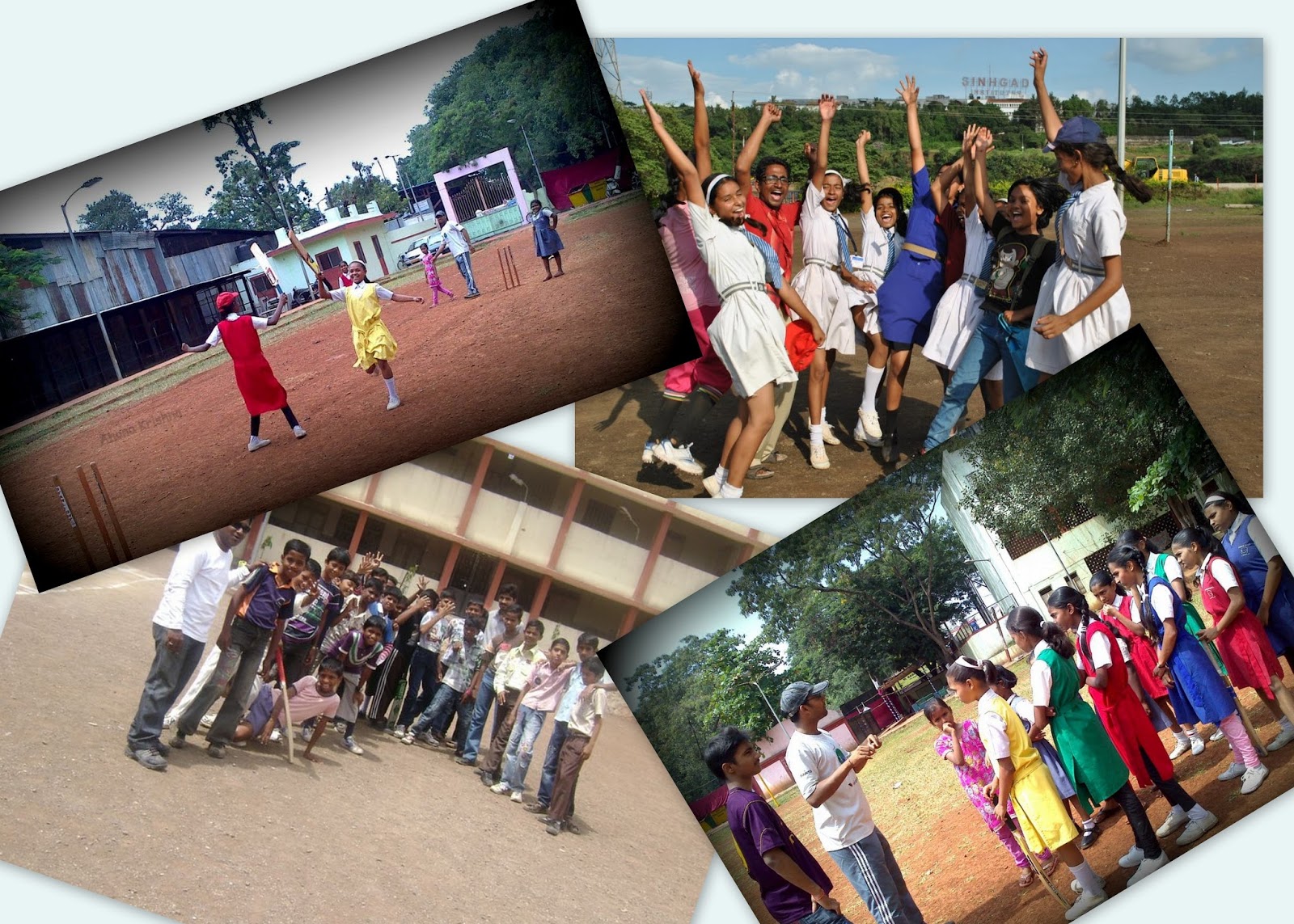
So, I
will end by saying that what really matters to me is to provide a better place
to live in for my kids and to make that happen I have to change the surrounding
.I have to work on the society and the mind-set with which people strive today
and that all can be done only when we offer the dignity of a human being back
to every people. It will only happen if we make them aware of their rights and
duties.
And, all
of this would happen if we give back the childhood to the kids who are right
now begging on the road, who are sitting on railways with their brother in
hands or moving out when their parents for work every day.
And the
solution which I can conceive of it is education “a Quality education for each and every kid
despite it’s background because at the last it’s not his fault and he shouldn’t
be paying for whole his life for what isn’t his fault at the first point”.


